Keberlanjutan Keberkahan pada Komunitas Bisnis Kuliner: CDA
CDI (Critical Discourse Analysis )
Abstract
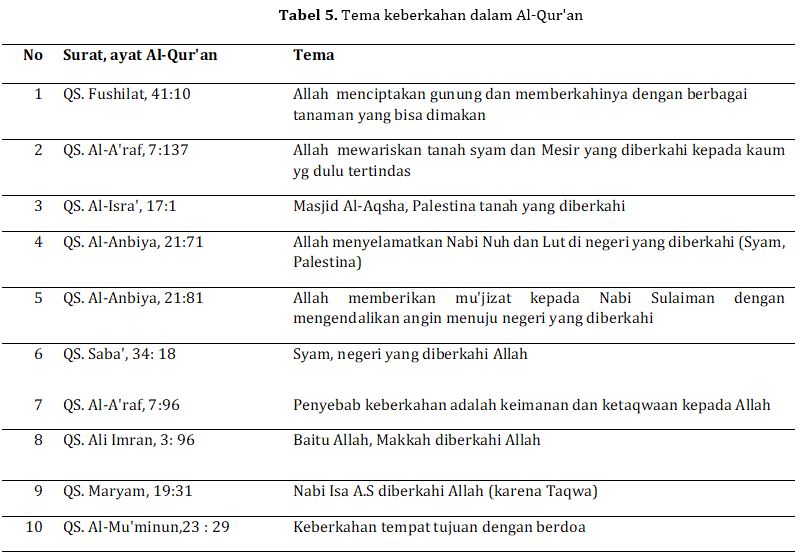
Tujuan penelitian ini adalah mendeskripsikan nilai-nilai religius sebagai sebab keberkahan bisnis. Orientasi bisnis biasanya hanya pada tujuan profit, benefit, pertumbuhan, dan keberlanjutan/ keberlangsungan. Dalam artikel ini diungkapkan konsep keberlanjutan bisnis yang berkah. Data diambil dari komunitas bisnis kuliner sebagai contoh empiris yang terdapat di kabupaten Bandung, kecamatan Cileunyi. Dalam penelitian ini digunakan metode deskriptif analisis. Agar hasil penelitiannya akurat, maka ditempuh dalam tiga langkah. Pertama, penyediaan data dengan metode simak-cakap dengan teknik kuisioner dan wawancara. Kedua, metode analisis yang digunakan secara eklektik antara Critical Discourse Analysis (CDA) pada tataran makro dan analisis prosentase. Ketiga, hasil analisis disajikan dalam tabel dan diberikan penjelasan secara deskriptif pada istilah-istilah ekonomi berbasis nilai-nilai religius. Nilai-nilai religious penyebab keberkahan adalah keimanan dan ketaqwaan. Dalam Al-Qur'an ada empat tema 'keberkahan', yaitu: (1) Mengimani Al-Qur'an dan mengamalkannya; (2) semua tempat orang yang beriman-bertaqwa, dan saling mendoakan; (3) Mu'jizat para Nabi; dan (4) mengikuti Sunnatu Allah. Rekomendasi dalam penelitian ini adalah perlunya revitalisasi nilai-nilai religious dalam aplikasi bisnis di masyarakat kabupaten Bandung, antara lain pada komunitas bisnis Cipacing, Cileunyi.
The purpose of this study is to describe religious values as a factor of business blessing. Business orientation is usually only for profit, benefit, growth, and sustainability goals. In this article, the concept of business sustainability is revealed. The data is collected from the culinary business community as an empirical example found in Bandung regency, Cileunyi district. This study also applies descriptive analysis method. In order to have accurate results, the steps of method are conducted in three steps. First, the provision of data with the method of conversation with questionnaire and interview techniques. Second, the analytical method used eclectically between Critical Discourse Analysis (CDA) at the macro level and percentage analysis. Third, the results of the analysis are presented in a table and given a descriptive explanation on economic terms based on religious values. The religious values that cause blessing are faith and devotion. In Qur'an there are four themes of 'blessing', namely: (1) Believing in Qur'an and practicing it; (2) all places are faithful, and pray for one another; (3) Miracles of the Prophets; and (4) following the Sunnatu Allah. The recommendation in this study is the need to revitalize religious values in business applications in Bandung regency community, including business community in Cipacing, Cileunyi.
References
Al-Qur’an, S. (2010). Al-Qur ‘anulkarim: Terjemah Tafsir per Kata. Bandung: Sygma Publishing.
Al-Wasilah, A. (2006). Chaidar, Pokoknya Kualitatif: Dasar-Dasar Merancang dan Melakukan Kualitatif: Jakarta: Pustaka jaya.
Allāh, M. Ḥ. A. (2002). Mafahim Islamiyah: menajamkan pemahaman Islam: Al-Izzah.
An-Nabhani, T. (2003). an-Nizham al-Ijtima’I fi al-Islam: diterjemahkan M. Nashir dkk, Sistem Pergaulan Dalam Islam, Bogor: Pustaka Thariqul Izzah.
Arikanto, S. (2006). Metode Penelitian Suatu Pendekatan Praktis. Jakarta: PT. Bina Aksara.
As-Sabatin, Y. (2009). Bisnis Islam Dan Kritik Atas Praktik Bisnis Ala Kapitalis: Bogor, Al-Azhar Press.
Badawi, A. Z. (1993). A dictionary of the social sciences: English-French-Arabic with an Arabic-English glossary and a French-English glossary: Librairie du Liban.
Chiu, R. L. (2004). Socio‐cultural sustainability of housing: a conceptual exploration. Housing, theory and society, 21(2), 65-76.
Fairclough, N. (1992). Discourse and social change (Vol. 10): Polity press Cambridge.
Fairclough, N. (2000). Critical analysis of media discourse. Media studies: A reader, 308-325.
Jurjani, A. I. M., & Al-Sharif, A.-S. (2014). Kitab al-Ta'rifat: Al-Hakawati.
Kates, R. W. (2018). What is sustainable development?
Mahsun, M. (2005). Metode penelitian bahasa: tahapan strategi, metode dan tekniknya: PT RajaGrafindo Persada.
Marzuqi, A. Y., & Latif, A. B. (2010). Manajemen Laba dalam Tinjauan Etika Bisnis Islam. Jurnal Dinamika Ekonomi & Bisnis, 7(1).
Munawwir, A. W., & Fairuz, M. (2007). Al Munawwir: kamus Indonesia-Arab: Pustaka Progressif.
Pennycook, A. (2001). Critical applied linguistics: A critical introduction: Routledge.
Rawiworrakul, T., Triumchaisri, S., & Mawn, B. (2010). Promoting cultural sustainability in the context of public health: A thai perspective. Sustainability, 2(8), 2707-2718.
http://www.unpad.ac.id/2015/09/isu-pembangunan-berkelanjutan-di-indonesia-masih-sebatas-retorika/ accesssed on 4 April 2018
http://www.jabarprov.go.id/index.php/pages/id/1343 accesssed on 4 April 2018
http://www.bandungkab.go.id/arsip/3285/ accesssed on 4 April 2018

This work is licensed under a Creative Commons Attribution-ShareAlike 4.0 International License.
Copyright
- The Author and each co-authors transfer the copyright and grant the journal right of publication with the work simultaneously licensed under an International Creative Commons Attribution and ShareAlike 4.0 License that allows others to share the work with an acknowledgement of the work's authorship and initial publication in this journal.
- Authors are able to enter into separate, additional contractual arrangements for the non-exclusive distribution of the journal's published version of the work (e.g., post it to an institutional repository or publish it in a book), with an acknowledgement of its initial publication in this journal.
- Authors should sign copyright transfer agreement when they have approved the final proofs sent by ISLAMIC RESEARCH prior the publication.
Author Guarantee
- The Author (Co-authors) guarantees that the Materials are an original work, submitted only to ISLAMIC RESEARCH, and have not been published previously.
- In case the Materials were written jointly with Co-authors, the Author guarantees that he/she has informed them of the terms of this Agreement and obtained their signatures or written permission to singe on their behalf.
- The Author guarantees as well that:
- The Materials do not contain libelous statements.
- The Materials do not infringe on other persons' rights (including without limitation copyrights, patent rights and the trademark right).
- The Materials do not contain facts or instructions that can cause damage or injury to third parties and their publication dose not cause the disclosure of any secret or confidential information
ISLAMIC RESEARCH is Published by Perhimpunan Intelektual Muslim Indonesia, and licensed under a Creative Commons Attribution-ShareAlike 4.0 International License.
Copyright ©2022.